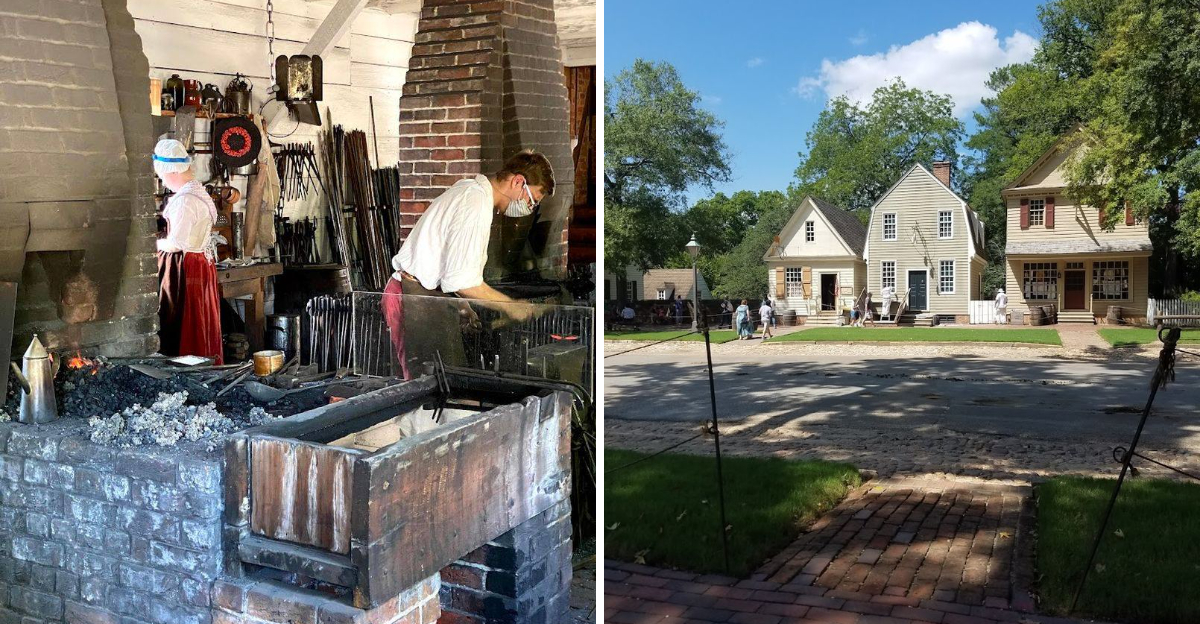
The ring of metal on metal echoes through the open door. Sparks fly as a blacksmith hammers a glowing piece of iron into shape.
This is the oldest working forge in Virginia, a place where the craft of blacksmithing has been practiced for centuries. You can stand just outside the shop and watch as skilled hands transform raw metal into hooks, hinges, and tools, all without electricity, just muscle and fire.
I spent an hour here, mesmerized by the process, the heat, the precision. The blacksmith answered questions without stopping his work, explaining the techniques that have been passed down through generations.
The forge is still functional, still producing pieces that are sold to visitors. Virginia has plenty of historic buildings, but this one is alive.
Go watch history being made, one hammer strike at a time.
The Story Behind the Forge and the Man Who Built It
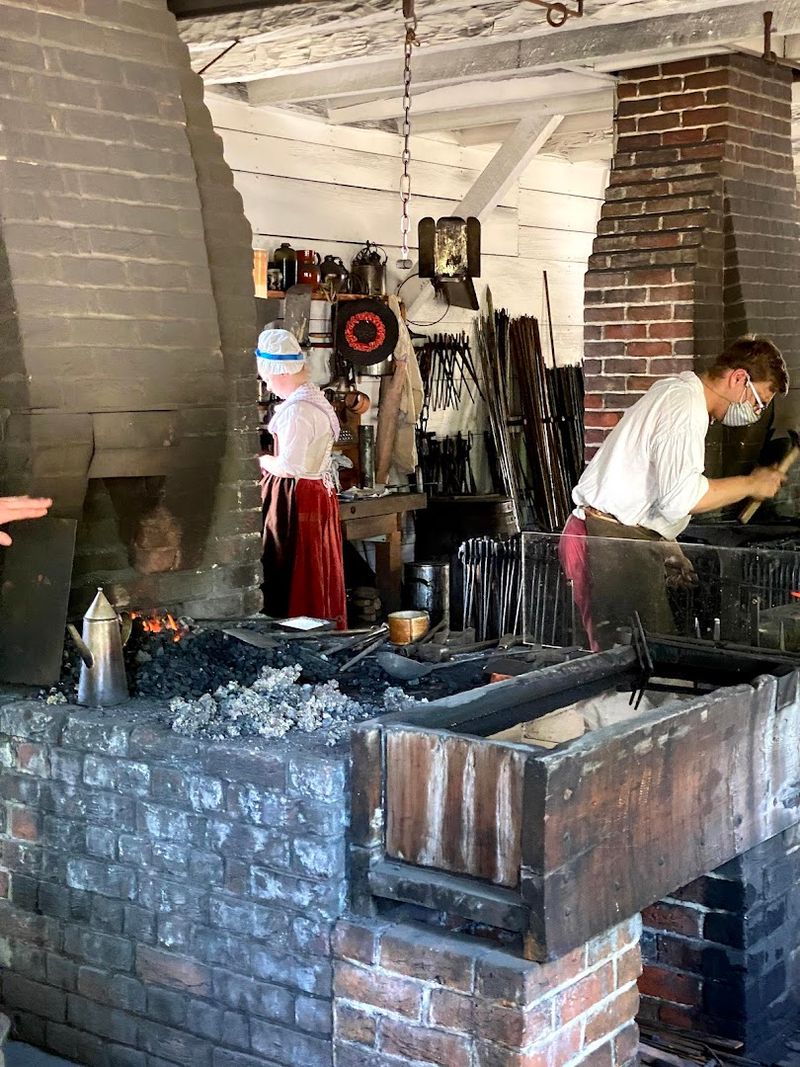
James Anderson was not just any blacksmith. Starting in the 1760s, he built one of the most important metalworking operations in all of colonial Virginia, and his reputation grew fast.
When the Revolutionary War erupted, Anderson stepped up in a massive way, turning his modest shop into a full-scale armory that kept Virginia’s soldiers fighting.
He supplied iron tools, repaired weapons, and coordinated a team that swelled to roughly forty workers at its peak. Blacksmiths, gunsmiths, tinsmiths, and nail-makers all worked under one roof, hammering out everything the war effort needed.
The sheer scale of that operation in the 1700s is genuinely mind-blowing.
Virginia owes a quiet but significant debt to this craftsman. Anderson served as public armorer for Virginia from 1766, a role that placed him at the center of the colony’s survival during one of the most turbulent periods in American history.
Learning his story before you step inside the shop makes every spark flying off the anvil feel personal and meaningful.
A Reconstruction Built on Real Archaeological Evidence
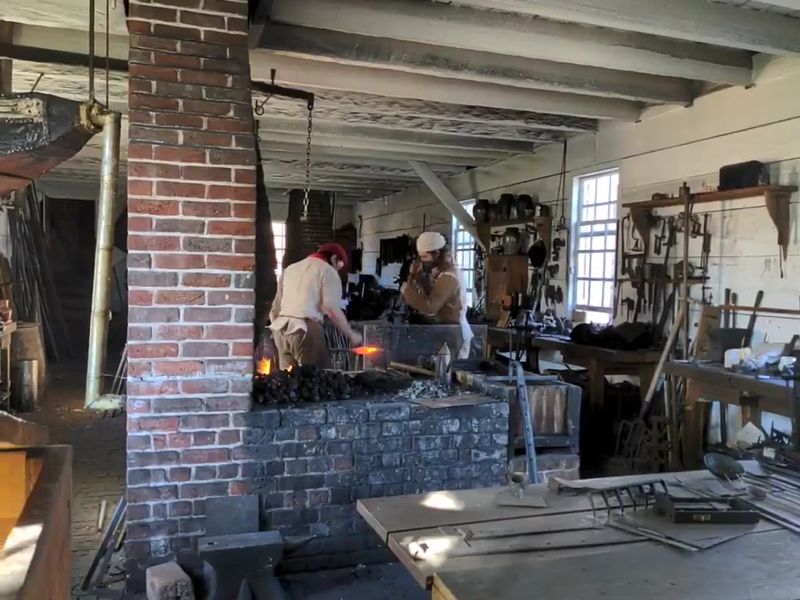
Not every historic building you visit is what it claims to be, but the James Anderson Blacksmith Shop earns its authenticity the hard way. The original smithy disappeared by the mid-1800s, so Colonial Williamsburg launched a serious archaeological investigation to bring it back accurately.
What came out of that research was extraordinary. A reconstruction completed between 2011 and 2013 replaced an older 1980s version, incorporating new findings from digs that revealed the shop’s true footprint, layout, and scale.
Every beam, every forge position, every workspace reflects real historical evidence rather than educated guessing.
Walking into a building that was rebuilt from the ground up using soil samples and artifact analysis feels completely different from walking into a generic museum replica. The attention to period-accurate detail here is the kind of obsessive craftsmanship that historians dream about.
Virginia is genuinely fortunate to have a site that treats reconstruction as a science rather than a shortcut. The result is a space that breathes with the spirit of the 18th century in a way that feels completely earned.
Seven Forges Roaring at Once Inside One Workshop
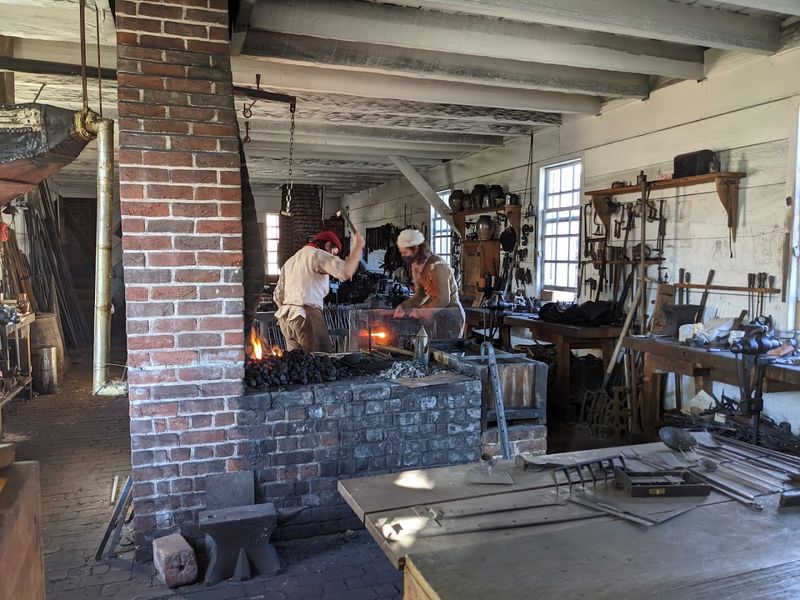
Most forge setups you might imagine involve one fire, one anvil, one blacksmith. The James Anderson Blacksmith Shop blows that picture apart completely.
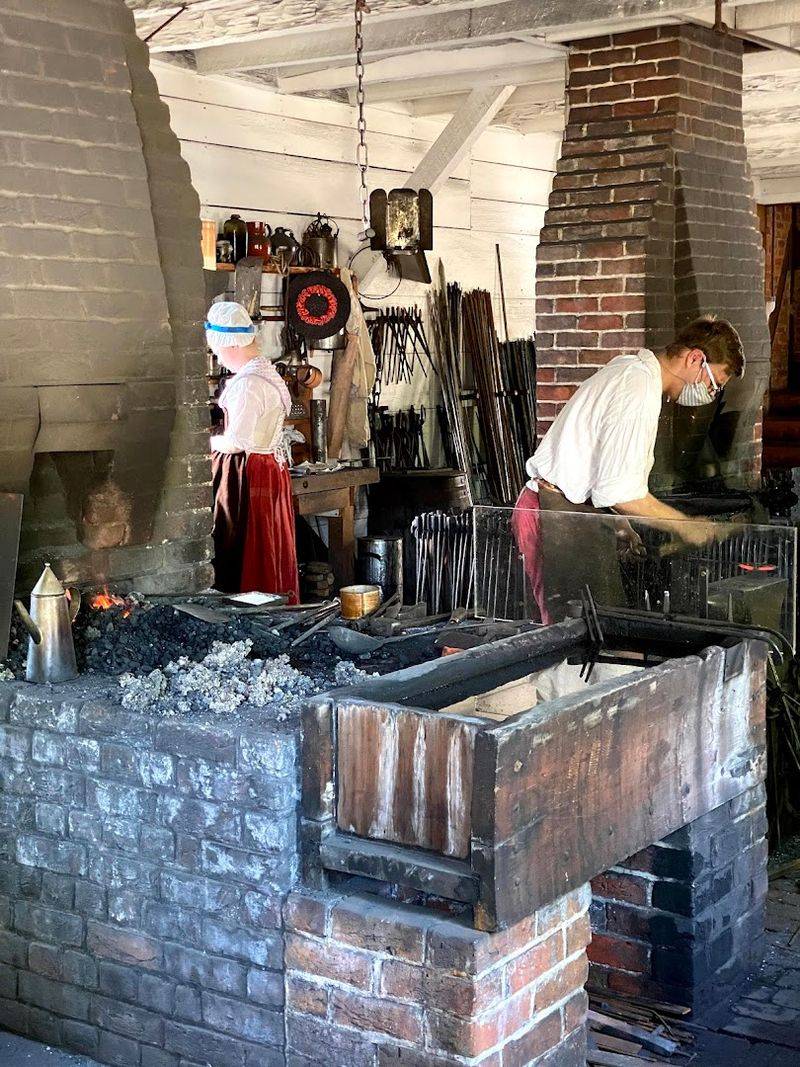
The reconstructed building houses seven forges, each one based on the expanded wartime production that Anderson ran during the Revolutionary War.
Standing inside when multiple forges are active is genuinely overwhelming in the best possible way. The heat radiates across the whole space, the smell of hot iron hangs in the air, and the rhythmic clang of hammers creates a soundtrack that feels ancient and alive at the same time.
Every forge represents a different task, a different specialty, and a different chapter of 18th-century American industry.
This is not a quiet museum corner with velvet ropes and glass cases. The shop hums with real energy, and the scale of seven working forges in one building gives you a visceral sense of how industrious and essential this place once was.
Virginia has plenty of history to offer, but few spots deliver that history through heat, sound, and physical presence the way this forge does. It is genuinely one of a kind.
Watching White-Hot Iron Get Hammered Into Shape by Hand
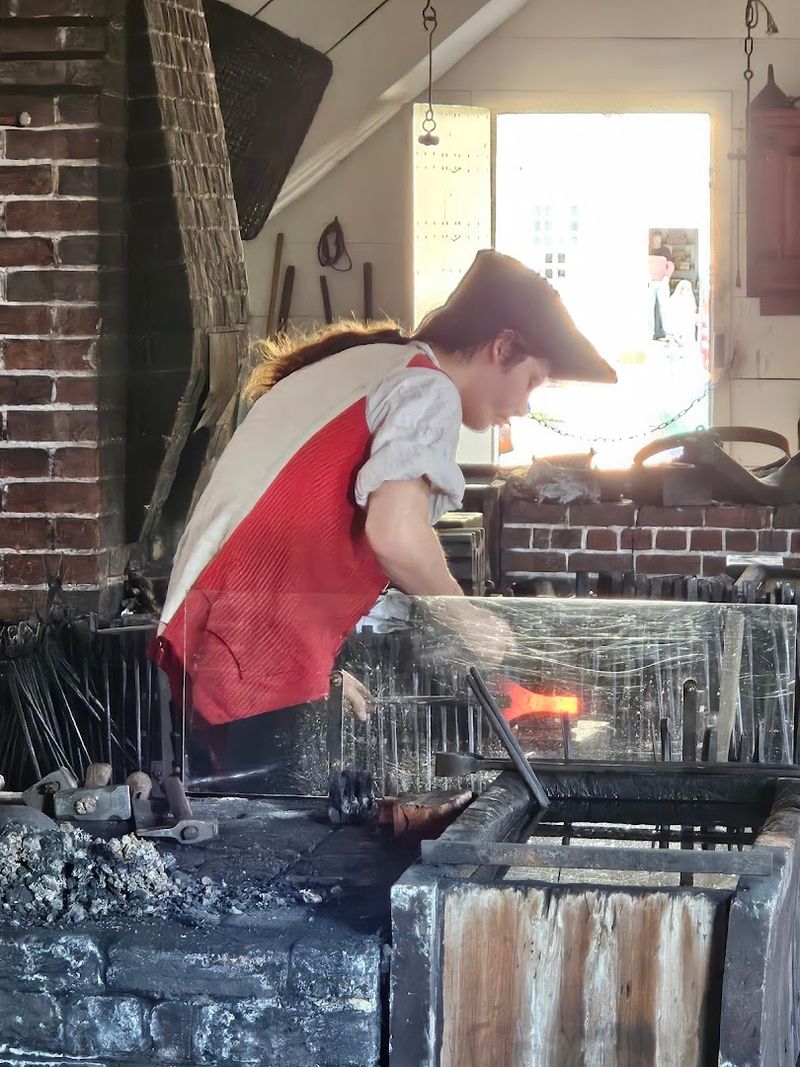
There is a moment when the blacksmith pulls a piece of iron from the forge and it is glowing almost white with heat, and time seems to slow down. What happens next is pure craft.
A few precise, powerful hammer blows and the metal bends, flattens, or curves exactly as intended. It looks effortless, and it absolutely is not.
At the James Anderson Blacksmith Shop, this happens right in front of you with no barrier, no screen, no narration track playing through a speaker. The artisans work in real time using 18th-century techniques and hand tools that have barely changed in centuries.
Tongs, hammers, punches, and chisels do all the work that modern machinery handles today.
Watching a skilled smith shape iron by hand teaches you something that no textbook ever could. The speed required before the metal cools, the reading of color to judge temperature, the confidence in each strike, all of it adds up to a craft that took years to master.
Kids go wide-eyed. Adults go quiet.
My first instinct was to pull out my notebook and start writing down everything I was seeing.
The Tools, Hardware, and Weapons They Actually Produced
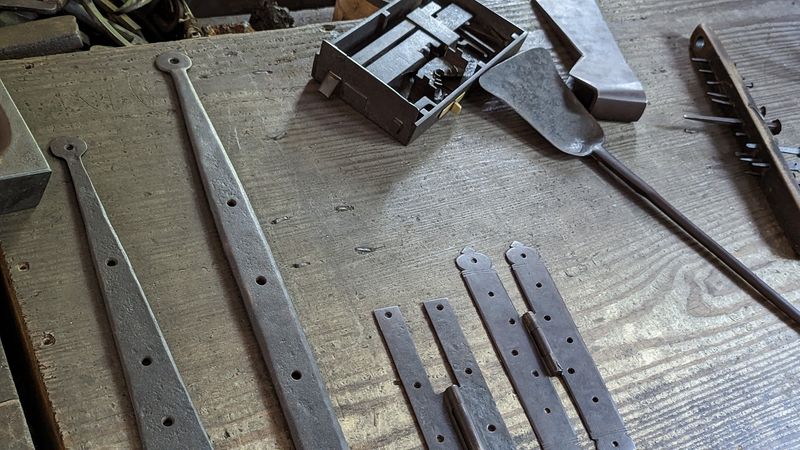
Forget horseshoes. The James Anderson Blacksmith Shop was never primarily about shoeing horses, and the artisans here are quick to clarify that with a knowing smile.
Anderson’s operation focused on tools, hardware, iron implements, and weapons, the practical building blocks of colonial life and revolutionary warfare.
Nails were a massive part of the output. In the 1700s, nails were so valuable that people sometimes burned down old buildings just to sift through the ash for salvageable ones.
Watching a nail being made by hand from a rod of iron gives you an instant appreciation for why they were treated like currency.
The shop also produced axes, hinges, bolts, hooks, and all manner of iron hardware that kept colonial Virginia running. During wartime, the focus shifted toward weapons maintenance and military supplies, making Anderson’s forge a strategic asset.
Samples of the items produced are displayed on the counter near the entrance so you can actually pick them up and feel the weight of history in your hands. That tactile moment is something no digital exhibit could ever replicate, and it makes the whole experience land differently.
The Role This Forge Played During the American Revolution
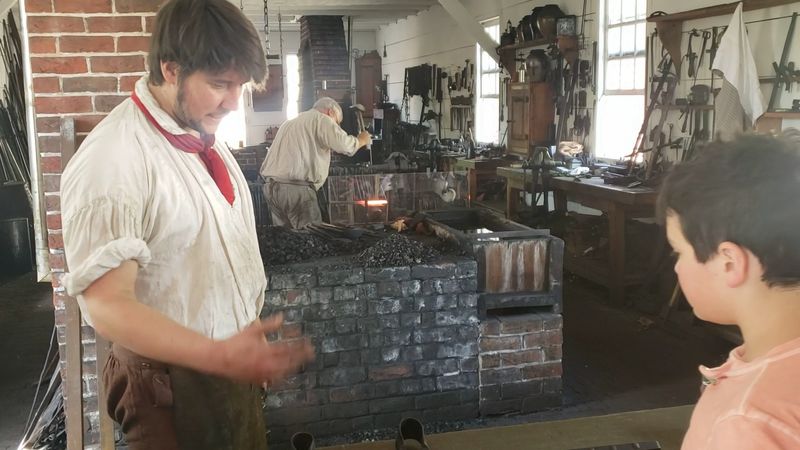
Most Revolutionary War stories center on battlefields and founding fathers, but the war was also won at the forge. James Anderson’s operation became a critical supply hub for Virginia’s troops, producing and repairing the iron goods that soldiers desperately needed to keep fighting.
Anderson expanded from two forges to seven specifically to meet wartime demand. His workforce grew to include specialists in gunsmithing, tinsmithing, and nail-making, creating a small industrial complex in the middle of colonial Williamsburg.
That kind of wartime pivot required both vision and serious logistical skill.
Virginia’s contribution to the Revolution is sometimes overshadowed by other colonies, but this forge stands as a reminder that the war effort ran on iron as much as it ran on ideals. The James Anderson Blacksmith Shop operated as the public armory for the entire colony, a responsibility that shaped the outcome of battles fought far from its walls.
Hearing the artisans explain this wartime history while sparks fly off the anvil makes the American Revolution feel immediate, personal, and surprisingly industrial. History class never made it feel this real.
How the Artisans Read Color to Control the Iron
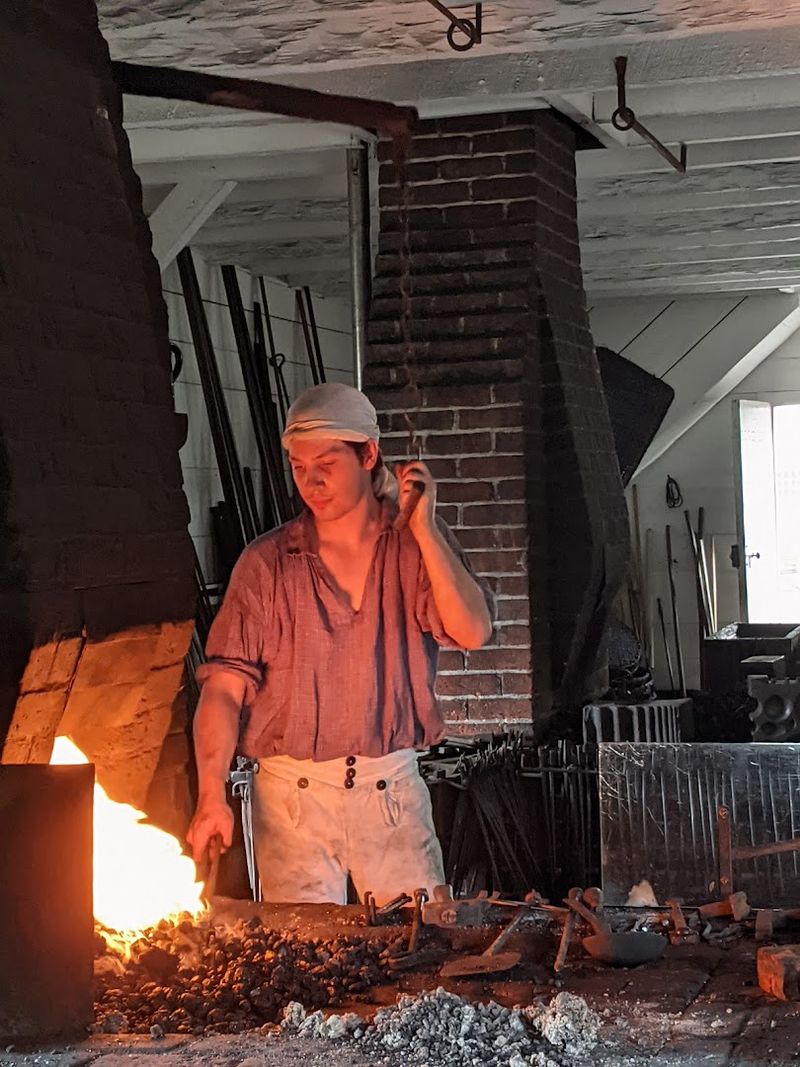
One of the most fascinating things I learned standing inside the James Anderson Blacksmith Shop is that blacksmiths read temperature through color. No thermometers, no digital gauges, just eyes trained to distinguish between a dull red glow and a brilliant orange-white that signals the iron is ready to work.
Cherry red means the metal is warm but not quite workable. Orange means you have a window.
White-hot means move fast or you will burn through the piece entirely. The artisans here explain this color language with the casual confidence of people who have internalized it completely, and watching them act on it in real time is genuinely mesmerizing.
This skill took apprentices years to develop historically, and modern practitioners train just as rigorously. The science behind it involves iron’s crystalline structure changing as heat is applied.
The practical art of reading those changes by eye is something that separates a real blacksmith from someone just swinging a hammer.
Virginia’s living history programs preserve this knowledge in a way that feels urgent and irreplaceable. Once these skills are lost, getting them back would take generations.
Asking Questions and Getting Real Answers From Real Craftspeople
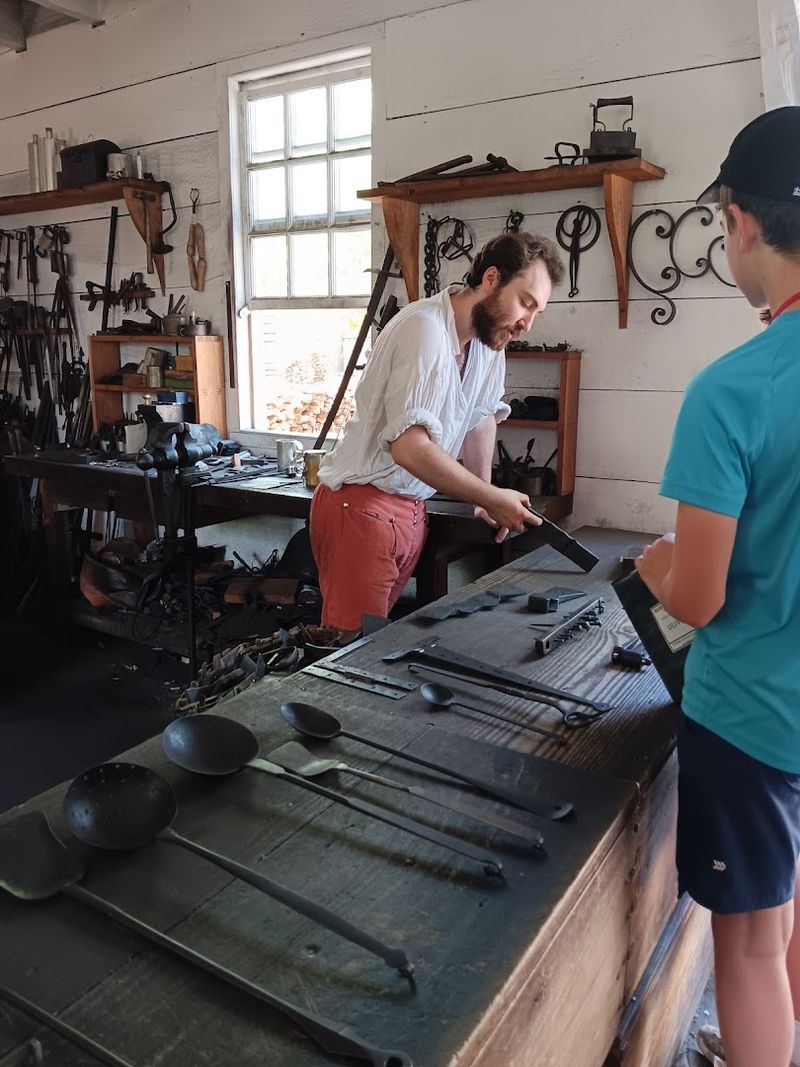
One thing that sets the James Anderson Blacksmith Shop apart from a typical museum is the complete openness to questions. The artisans working the forges are not just demonstrators going through a scripted routine.
They genuinely know their craft inside and out, and they enjoy talking about it.
Ask about the difference between iron and steel in the 18th century and you will get a detailed, fascinating answer. Curious about how a specific tool was made?
They will likely show you rather than just explain it. The level of knowledge on display here is impressive, and the willingness to share it freely makes the whole experience feel like a conversation rather than a lecture.
Families with curious kids do especially well here. Patient, engaged, and clearly passionate about their work, the craftspeople at this shop have a knack for making technical information accessible and exciting for all ages.
My own questions got answered with enthusiasm and follow-up demonstrations I did not even ask for. That kind of generosity with knowledge is rare anywhere, and it is one of the biggest reasons the James Anderson Blacksmith Shop earns such consistent enthusiasm from everyone who visits.
Navigating Colonial Williamsburg to Find the Shop
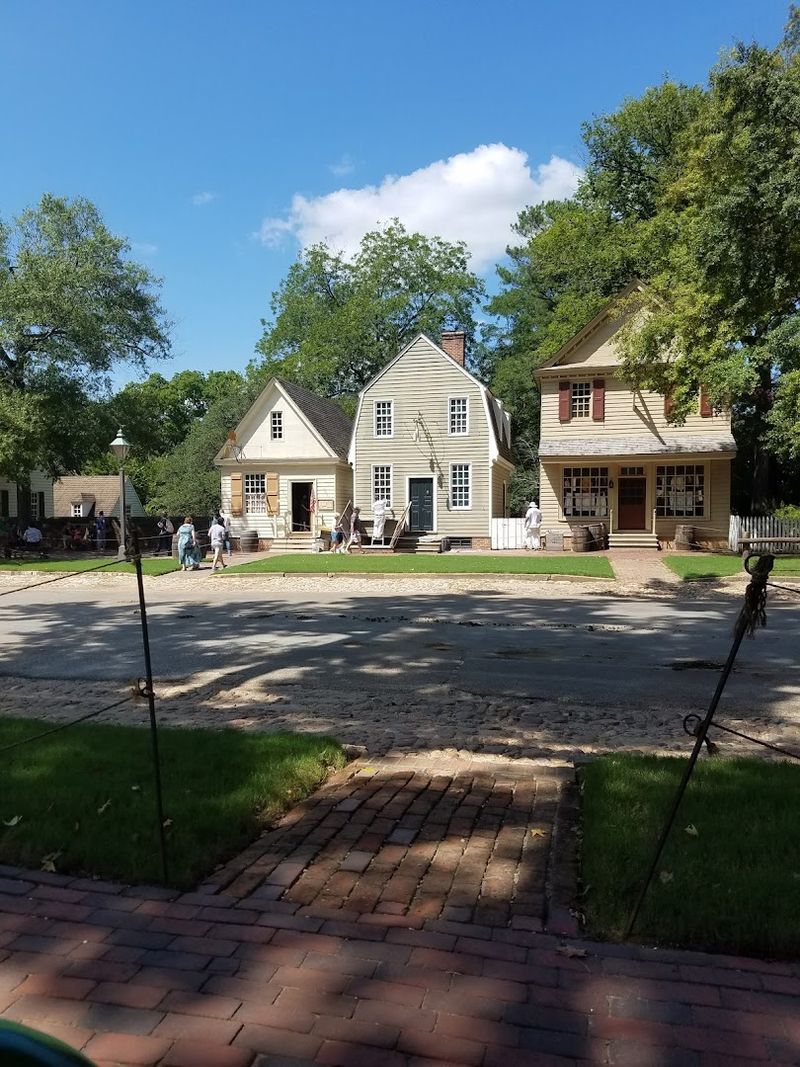
Getting to the James Anderson Blacksmith Shop takes a little navigation, and that is actually part of the fun. The shop sits off East Duke of Gloucester Street, tucked behind other buildings in a courtyard that you walk through to reach the forge area.
First-time visitors sometimes walk right past it, which would be a genuine shame.
Colonial Williamsburg is a sprawling living history museum covering over three hundred acres in Virginia, so planning your route matters. A ticket purchased at the visitor center grants access to the historic area, and the blacksmith shop is well marked once you know to look for it on the south side of the main street.
My advice is to put this stop near the top of your list rather than saving it for the end when energy is running low. The walk through the courtyard sets the mood perfectly, and arriving with fresh eyes means you catch all the small details that make the space so special.
Parking is available in garages along the outer streets, making the approach straightforward even for first-time visitors to the area. Give yourself more time than you think you need.
Plan Your Visit to James Anderson Blacksmith Shop in Williamsburg
Planning a visit to the James Anderson Blacksmith Shop is straightforward, and the payoff is absolutely worth the effort. The shop operates daily and keeps consistent hours that make it easy to fit into a full day of exploring Colonial Williamsburg.
Arriving earlier in the day tends to mean smaller crowds and more time to linger near the forges.
The address is 310 E Duke of Gloucester St, Williamsburg, VA 23185, right in the heart of the historic district. Access requires a Colonial Williamsburg ticket, which covers entry to multiple sites across the area and represents solid value given how much there is to experience.
For questions or planning details, the Colonial Williamsburg website at colonialwilliamsburg.org has everything you need.
Virginia has no shortage of historic attractions, but very few deliver the kind of multi-sensory, hands-on engagement that this forge provides. The heat, the sound, the smell of hot iron, and the sight of skilled hands shaping metal all combine into something genuinely unforgettable.
Pack comfortable shoes, bring your curiosity, and clear your afternoon schedule. Once you step inside and hear that first hammer ring off the anvil, leaving early stops being an option entirely.
Dear Reader: This page may contain affiliate links which may earn a commission if you click through and make a purchase. Our independent journalism is not influenced by any advertiser or commercial initiative unless it is clearly marked as sponsored content. As travel products change, please be sure to reconfirm all details and stay up to date with current events to ensure a safe and successful trip.
